


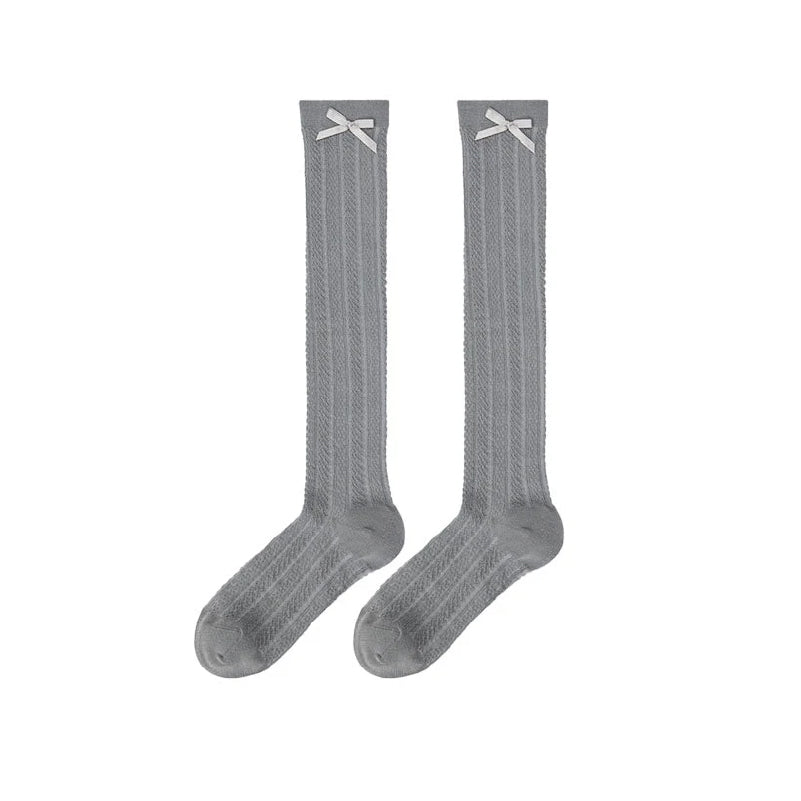
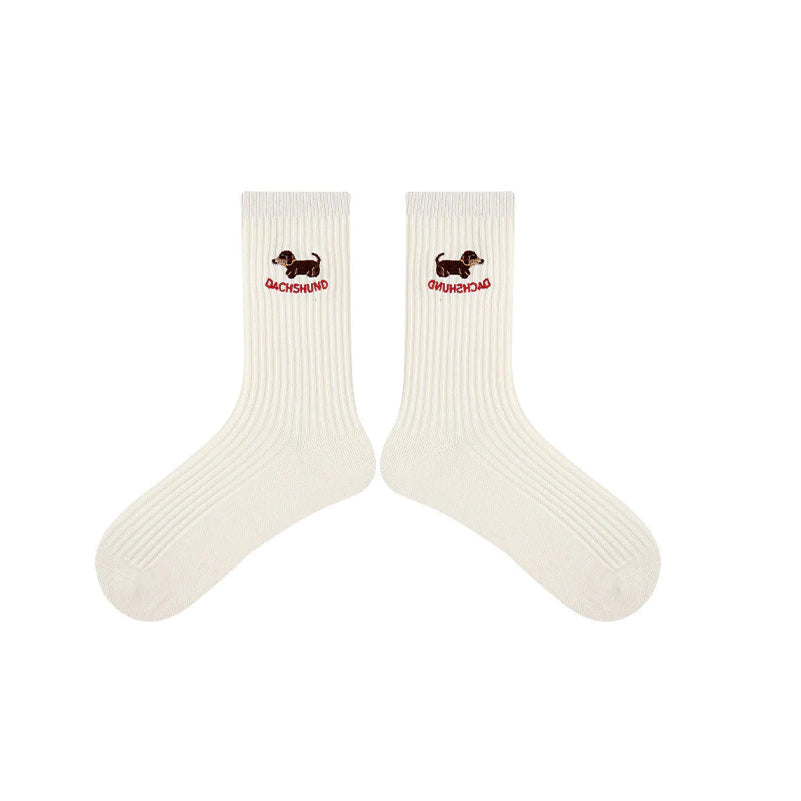
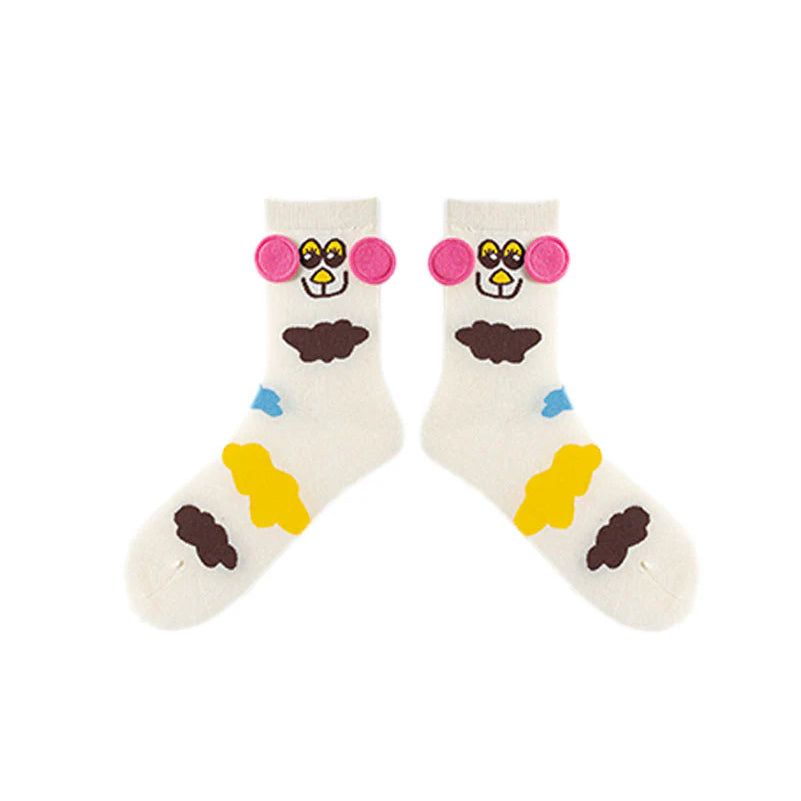
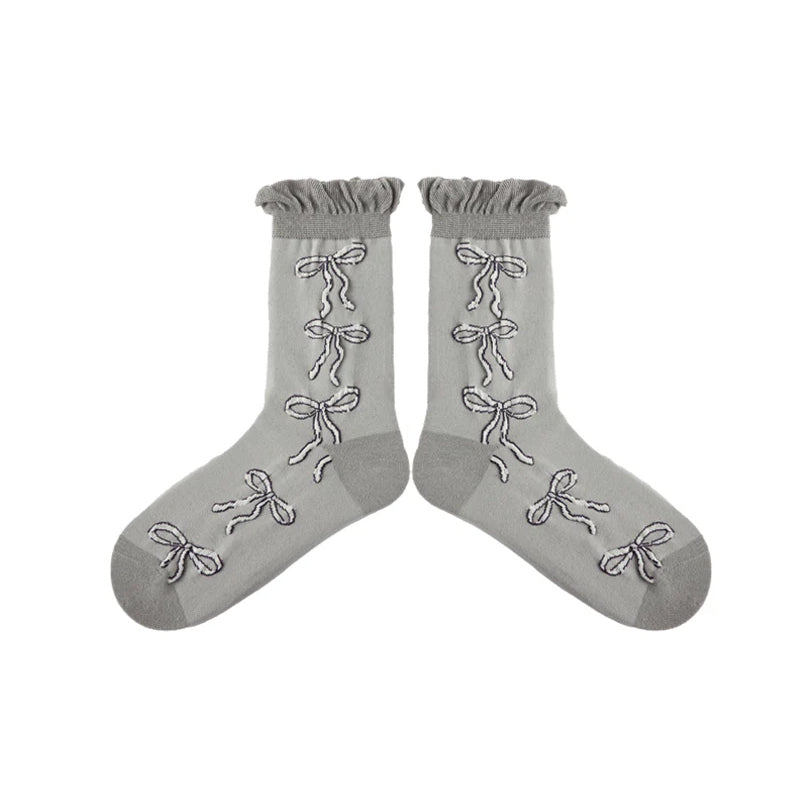





























The Sweetnana Sock Material Guide (Part 3): 15 Common Myths & FAQs About Sock Materials
The 15 Most Common Questions About Sock Materials — Answered
When shopping for socks, many people pay close attention to the materials.
Some prefer 100% cotton, others love wool, while many believe that natural fibers are always better than synthetic ones.
The truth is, there are many misconceptions about sock materials.
In this guide, Sweetnana shares insights gained through years of product development to answer the questions we hear most often and help you better understand what makes a truly high-quality pair of socks.
Myth #1: Are 100% Cotton Socks Always the Best?
Answer: Not necessarily.
Many people believe that 100% cotton automatically means better quality.
While pure cotton is soft and comfortable, it has limited elasticity, is more likely to lose its shape, and is generally less durable.
That's why most premium socks today include carefully balanced amounts of Nylon and Spandex to improve stretch, durability, and shape retention.
For everyday socks, a well-designed fiber blend usually performs better than a single material.
Myth #2: Is Polyester Always a Low-Quality Material?
Answer: Absolutely not.
Polyester is often misunderstood as a "cheap" fiber.
In reality, high-quality polyester is widely used in sportswear, outdoor apparel, and performance textiles.
In socks, polyester helps:
-
Improve wash durability
-
Maintain color vibrancy
-
Enhance structural stability
-
Extend the lifespan of the socks
The quality of polyester depends on the fiber grade and how it is blended—not simply on whether polyester is present.
Myth #3: Why Do Most Socks Contain Spandex?
Because socks need elasticity.
Without Spandex, socks are more likely to become loose, slip down, and lose their shape over time.
Adding an appropriate amount of Spandex allows socks to fit the foot comfortably while improving support and long-term shape retention.
Myth #4: Is Nylon a Synthetic Fiber?
Yes.
However, it is also one of the most important functional fibers in the sock industry.
Nylon's greatest advantage is its exceptional abrasion resistance.
Without it, high-friction areas such as the heel and toe would wear out much faster.
That's why Nylon is widely used by premium sock brands around the world.
Myth #5: Are Wool Socks Always Itchy?
Not at all.
Many people associate wool with itchiness because they have experienced traditional wool products.
However, Merino Wool uses much finer fibers, making it significantly softer and more comfortable against the skin.
When blended correctly, Merino Wool socks provide warmth without the scratchy feeling often associated with ordinary wool.
Myth #6: Is More Mulberry Silk Always Better?
Not necessarily.
Mulberry Silk is prized for its luxurious softness and comfort.
However, it is less abrasion-resistant than many other fibers.
Using only Mulberry Silk may reduce the overall durability of a sock.
That's why premium Mulberry Silk socks typically combine silk with functional fibers to achieve the ideal balance between comfort and durability.
Myth #7: Are Natural Fibers Always Better Than Functional Fibers?
Natural fibers and functional fibers are not competitors—they complement each other.
Natural fibers provide softness, breathability, and comfort.
Functional fibers improve durability, elasticity, and structural stability.
The best socks combine both to create the ideal wearing experience.
Myth #8: Are Thicker Socks Always Warmer?
Not necessarily.
Warmth depends more on the fiber itself than on thickness.
For example, Merino Wool can provide excellent insulation while remaining relatively lightweight.
When choosing winter socks, pay attention to the material—not just the thickness.
Myth #9: Should You Avoid Wool Socks in Summer?
Not always.
Merino Wool naturally regulates temperature and efficiently manages moisture.
That's why it is commonly used in high-performance hiking and athletic socks—even during warmer months.
Myth #10: Are Expensive Socks Just Overpriced?
Price alone doesn't determine quality.
The value of a pair of socks depends on many factors, including:
-
Material quality
-
Yarn quality
-
Knitting craftsmanship
-
Wearing comfort
-
Durability and lifespan
Premium socks are designed to provide better comfort and maintain their performance over time.
Frequently Asked Questions
Q1: What materials are best for summer socks?
We recommend:
-
Lyocell
-
Mulberry Silk
-
Bamboo Fiber
-
Modal
These materials are lightweight, breathable, and excellent at moisture management, helping keep your feet cool and dry.
Q2: Which materials are warmest for winter?
Recommended materials include:
-
Merino Wool
-
Mercerized Wool
-
Coral Fleece
-
Phoenix Fleece
They provide excellent insulation while maintaining comfort.
Q3: What materials are best for people who sweat easily?
We recommend materials with excellent moisture management, such as:
-
Lyocell
-
Bamboo Fiber
-
Modal
These fibers help keep feet fresh and comfortable throughout the day.
Q4: Why aren't socks made from 100% natural fibers?
Because socks also require elasticity, durability, and shape retention.
Functional fibers help socks maintain their fit and extend their lifespan.
Q5: Why does Sweetnana use blended fabrics?
Because no single fiber can provide every performance benefit.
By carefully blending different materials, we create socks that offer comfort, durability, breathability, and flexibility at the same time.
Q6: Which material feels the softest?
Mulberry Silk, Modal, and Lyocell are among the softest fibers used in premium socks.
The best choice depends on the intended use of the product.
Q7: Are wool socks suitable for everyday wear?
Absolutely.
Especially Merino Wool, which offers warmth, breathability, and exceptional comfort, making it an excellent everyday choice during cooler seasons.
Q8: Why do athletic socks contain more functional fibers?
Sports and active lifestyles place greater demands on socks.
Functional fibers improve support, elasticity, durability, and overall performance during movement.
Q9: Why do socks pill?
Pilling is influenced by friction, fiber characteristics, yarn quality, knitting techniques, and care methods.
Choosing high-quality materials and following proper washing instructions can help minimize pilling.
Q10: How can I make my socks last longer?
We recommend:
-
Wash using a gentle cycle.
-
Avoid high-temperature drying.
-
Separate light and dark colors.
-
Replace worn socks regularly.
Proper care helps preserve comfort, appearance, and durability.
The Sweetnana Quality Philosophy
At Sweetnana, a great pair of socks is about much more than beautiful design.
True quality begins with selecting the right fibers, applying thoughtful craftsmanship, and carefully balancing different materials to achieve the best wearing experience.
We don't simply pursue the most expensive fibers, nor do we compromise comfort to reduce costs.
From Combed Cotton, Lyocell, and Mulberry Silk to Merino Wool, Mercerized Wool, Coral Fleece, Phoenix Fleece, as well as functional fibers like Nylon, Spandex, and Polyester, every material has a specific purpose.
Together, they represent our understanding of what makes a truly premium pair of socks.
The best socks aren't the ones made with the most materials—they're the ones in which every material is chosen for the right reason and performs its role perfectly.
We hope that every step you take in Sweetnana socks brings you lasting comfort, premium quality, and the joy of original design.
Because we believe:
Every comfortable step begins with carefully chosen fibers.